
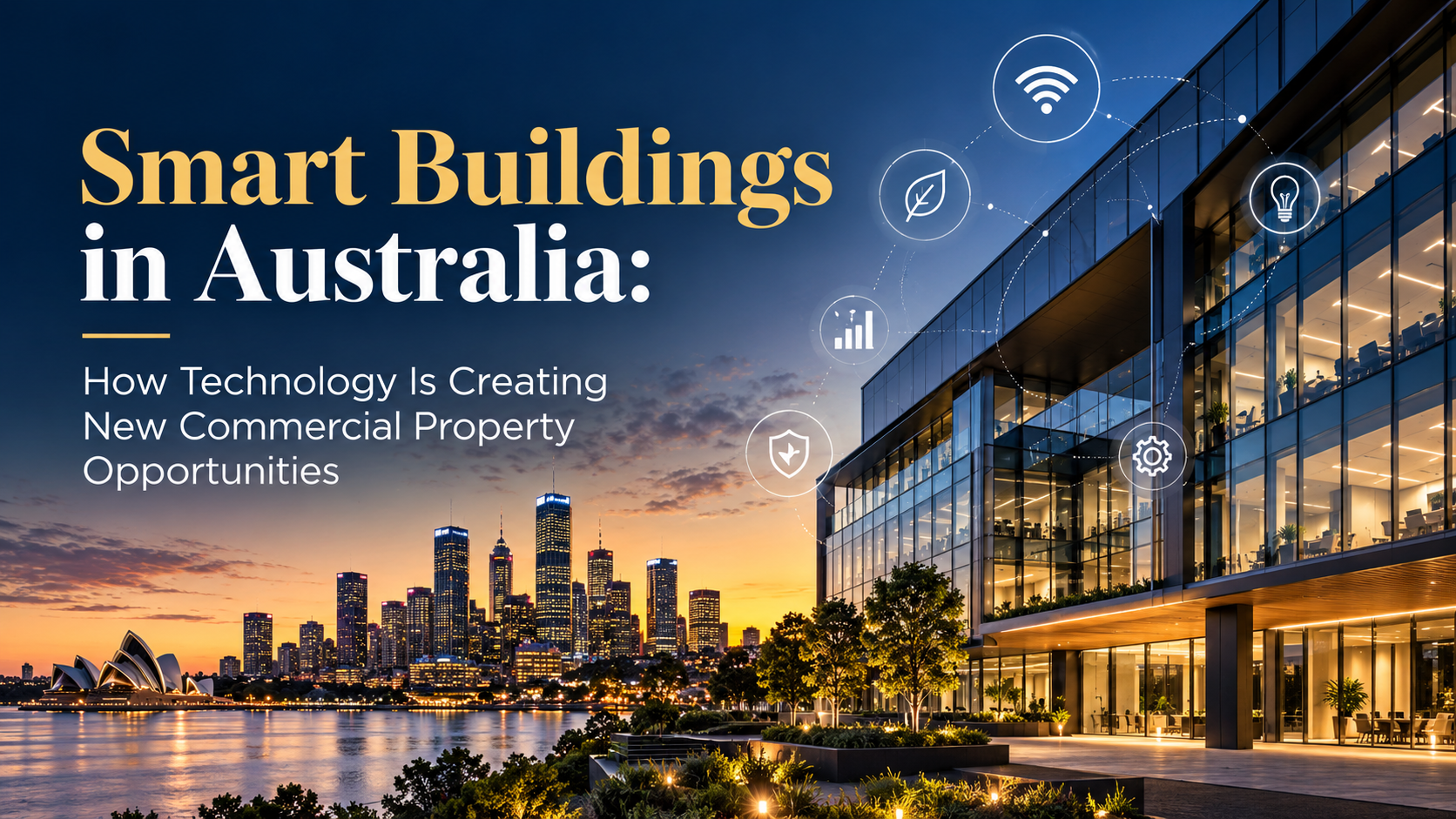
Smart Buildings in Australia: How Technology Is Creating New Commercial Property Opportunities
Smart buildings are transforming the Australian commercial property market by changing how buildings operate, how tenants experience their workplaces and how property owners manage their assets. From automated lighting to intelligent energy monitoring, smart building technology is creating opportunities to improve building performance, operational efficiency and long-term property competitiveness. For commercial property investors, understanding these technological developments is becoming increasingly important when evaluating existing assets and future investment opportunities.
What Are Smart Buildings?
Common smart building technologies include:
> Building management systems: Monitor and control heating, ventilation, air conditioning and other building services.
> Smart energy monitoring: Tracks electricity consumption and identifies potential inefficiencies.
> Automated lighting: Adjusts lighting according to occupancy and operating requirements.
> Intelligent security systems: Supports access control, monitoring and building safety.
Occupancy sensors: Provides insights into how spaces are used throughout the day.
Together, these systems can help commercial property owners make more informed operational decisions.
How Smart Building Technology Benefits Commercial Property Investors
1 . Improved Energy Efficiency :
Energy consumption can represent a significant operating expense for commercial buildings. Smart monitoring systems help identify unnecessary energy use and support more efficient building management.
For investors, energy efficiency improvements may help reduce operating costs, depending on the building, equipment and implementation expenses.
2. Better Tenant Experience :
Modern commercial tenants may value comfortable indoor environments, reliable building systems, convenient access and efficient facilities.
Smart building technology can support these expectations through automated climate controls, digital access systems and responsive building services.
3. Proactive Maintenance :
Connected sensors and monitoring systems can help identify equipment performance issues before they develop into more disruptive problems.
This can support maintenance planning and help property managers make better-informed decisions about repairs and equipment replacement.
4. Stronger Commercial Property Competitiveness :
As tenant expectations evolve, buildings with efficient systems and useful technology may be better positioned to compete for tenants.
However, technology alone does not guarantee higher rental income or property value. Location, lease terms, building condition and tenant demand remain essential considerations.
What Should Investors Consider Before Upgrading a Building?
Before investing in smart building technology, commercial property owners should assess the cost of installation, compatibility with existing systems, ongoing maintenance and potential cybersecurity risks.
It is also important to identify which upgrades will deliver practical benefits rather than investing in technology simply because it is new.
The Future of Smart Buildings in Australia
Smart buildings are becoming an important consideration in commercial property management and investment planning. Technology can help owners understand asset performance, respond to tenant needs and identify opportunities for operational improvements.
For Australian commercial property investors, the opportunity lies in choosing technology that delivers measurable value, supports tenant demand and strengthens the long-term performance of the asset.
Related Commercial Property Guides
Mlina Editorial — Mlina Group helps Australians invest in commercial property through buyer advocacy, education, and asset management. Meet our team.
Ready to Take the Next Step?
Learn more about commercial property investment in our upcoming webinar
Join Our Next Webinar