
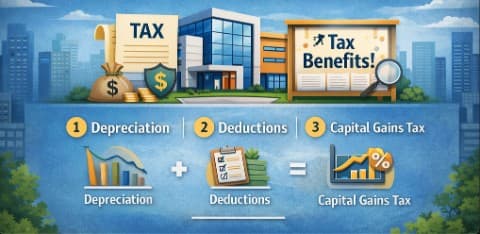
Key Tax Benefits for Commercial Property Investors
In the world of commercial real estate, your "take-home" profit isn't just determined by the rent you collect—it’s determined by the taxes you don't pay. One of the greatest advantages of commercial property is the suite of tax incentives designed to encourage investment.
Introduction
In the world of commercial real estate, your "take-home" profit isn't just determined by the rent you collect—it’s determined by the taxes you don't pay. One of the greatest advantages of commercial property over other asset classes is the suite of tax incentives designed to encourage investment and development. If you aren't leveraging these four tax benefits, you are likely leaving thousands of dollars on the table every year.
1. Depreciation: The Non-Cash Tax Shield
Depreciation is often called the "magic" of real estate investing. It allows you to claim a deduction for the wear and tear of a building and its fixtures over time—even if the property’s market value is actually increasing.
- Building Structure: You can claim a percentage of the construction cost of the building (capital works).
- Plant & Equipment: This covers removable items like air conditioning units, carpets, security systems, and lifts.
Pro Tip: Invest in a professional Depreciation Schedule. A quantity surveyor can identify accelerated depreciation opportunities (like cost segregation) that can significantly boost your deductions in the first few years of ownership.
2. Interest Deductions on Investment Loans
The cost of borrowing money to purchase or improve your commercial asset is generally tax-deductible. This is a massive advantage for investors using "leverage" to grow their portfolios.
What can you deduct?
- The interest portion of your monthly mortgage payments.
- Interest on credit lines used for property renovations.
- Fees associated with procuring the loan (in many jurisdictions).
Note: You cannot deduct the principal portion of your mortgage payment—only the interest.
3. Immediate Deductions for Operating Expenses
Nearly every dollar you spend to maintain and manage your property can be used to offset your rental income. These are considered "operating expenses" and are typically fully deductible in the year they occur.
Common claimable expenses include:
- Property Management: Fees paid to agencies to find tenants and collect rent.
- Repairs & Maintenance: Fixing a broken window or servicing the HVAC system.
- Professional Services: Fees for accountants, lawyers, and consultants.
- Insurance & Taxes: Building insurance premiums and municipal/property taxes.
4. Capital Gains Tax (CGT) Advantages
While income tax affects your monthly cash flow, Capital Gains Tax (CGT) affects your "exit" wealth. Long-term commercial investors often benefit from significant concessions when they finally decide to sell.
- Holding Period Discounts: In many regions, if you hold an asset for more than 12 months, you may be eligible for a 50% discount on the taxable gain.
- 1031 Exchanges (US-specific): Allows you to defer paying capital gains taxes if you reinvest the proceeds into a "like-kind" property.
Why Tax Strategy Matters
Understanding these benefits isn't just about compliance; it's about performance. Effective tax planning helps:
- Improve Net Cash Flow: More money stays in your bank account each month.
- Increase After-Tax ROI: Your real return on investment is what you keep after the taxman takes his share.
- Support Faster Portfolio Growth: Use your tax savings to fund your next deposit.
Final Takeaway
Tax laws are powerful but complex, and they vary significantly by jurisdiction. To ensure you are maximizing every available deduction while remaining compliant, always consult with a qualified tax advisor or CPA who specializes in commercial real estate.
Related Commercial Property Guides
Mlina — Mlina Group helps Australians invest in commercial property through buyer advocacy, education, and asset management. Meet our team.
Ready to Take the Next Step?
Learn more about commercial property investment in our upcoming webinar
Join Our Next Webinar