
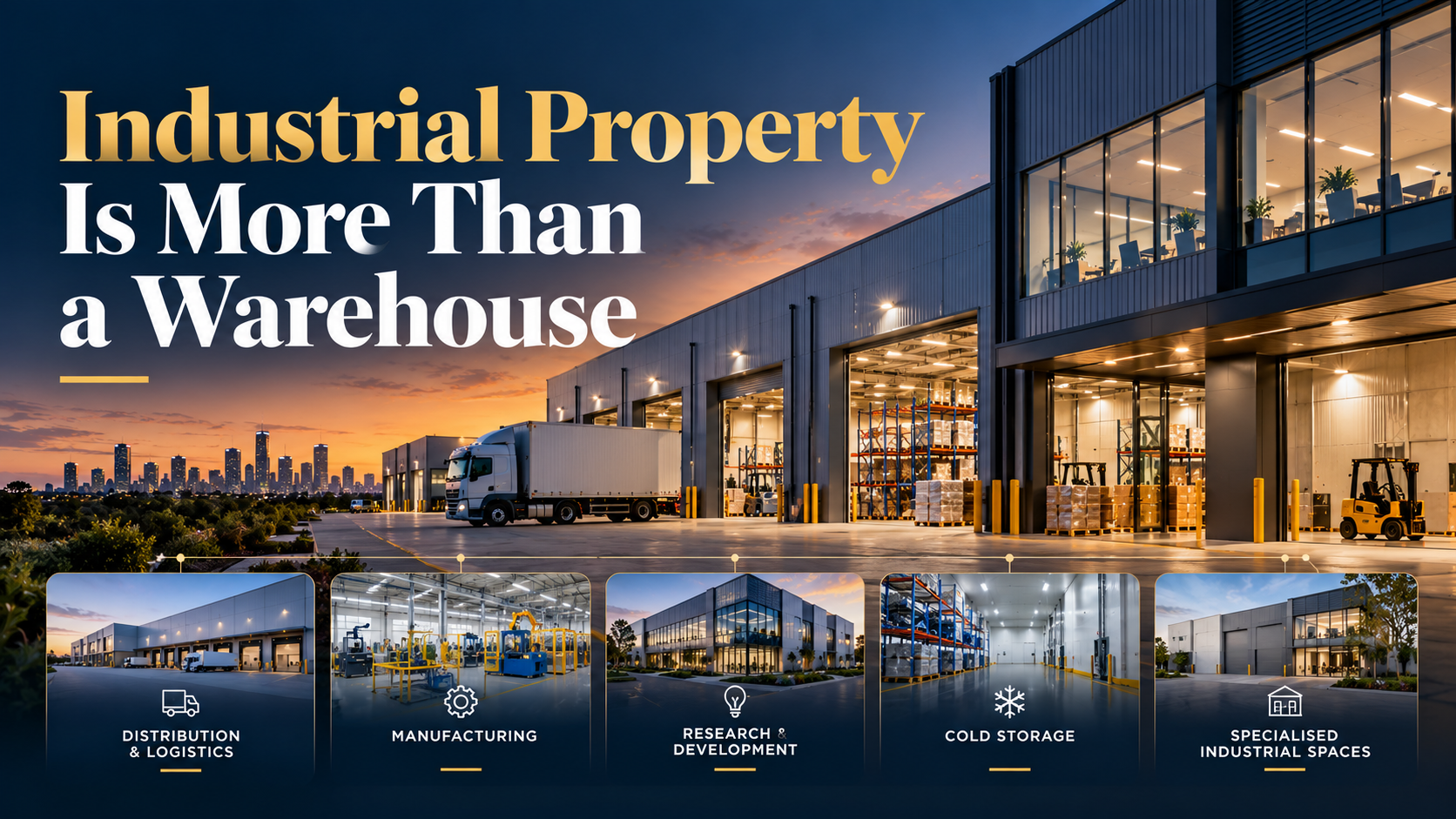
Industrial Property Is More Than a Warehouse
Explore industrial property investment in Australia, from logistics hubs and manufacturing facilities to cold storage and specialized industrial assets.
Industrial Property in Australia: Why It’s More Than Just Warehouses
For commercial property investors, understanding the different types of industrial real estate can help identify opportunities that align with their investment strategy. Each asset type has different tenant requirements, operational needs, property features and potential risks.
Whether you are exploring industrial real estate for the first time or expanding an existing portfolio, looking beyond traditional warehouses can provide a clearer understanding of the sector.
What Is Industrial Property?
Industrial property refers to commercial real estate used for activities such as manufacturing, storage, distribution, processing and specialized business operations.
Unlike traditional office or retail properties, industrial assets are often designed around practical business requirements, including vehicle access, loading facilities, power capacity, storage space and specialized equipment.
Common types of industrial property in Australia include:
1. Warehouses and distribution centres: Facilities used to store, sort and distribute goods.
2. Manufacturing facilities: Properties designed for production, assembly and industrial processing.
3. Logistics centres: Facilities supporting freight movement, transportation and supply chain operations.
4. Cold storage facilities: Temperature-controlled properties used for food, pharmaceuticals and other temperature-sensitive goods.
5. Industrial workshops: Properties used for repairs, fabrication, equipment servicing and trade-related activities.
6. Specialized industrial facilities: Purpose-built assets designed for specific industries or operational requirements.
Each category serves a different business purpose, which can influence its suitability for particular tenants and investors.
Why Industrial Property Is More Than Just Warehouses
1. Different Businesses Require Different Facilities
Industrial tenants have diverse operational requirements. A logistics company may priorities loading docks and truck access, while a manufacturer may require high power capacity, ventilation and specialized equipment
These differences influence how an industrial property is designed, leased and maintained.
For investors, understanding the intended use of a property is essential before assessing its investment potential.
2. Location Plays a Critical Role
Location is a major consideration in industrial property investment. Businesses may priorities proximity to transport routes, major highways, ports, suppliers, customers and distribution networks.
A property that supports efficient transportation and business operations may appeal to certain tenants. However, its suitability also depends on local demand, competing properties, accessibility and the needs of the intended occupier.
When assessing industrial real estate in Australia, investors should consider how the location supports the tenant's operations rather than evaluating the address alone.
3. Specialized Features Can Influence Tenant Demand
Some industrial properties include features that are difficult or expensive to replicate, such as temperature-controlled storage, heavy-duty flooring, specialized power infrastructure or purpose-built production areas.
These features may make a property suitable for a narrower group of businesses.
Investors should assess whether the property's specialized features match the needs of potential tenants. Highly customized facilities may offer advantages for suitable occupiers, but they can also be more difficult to lease if the original tenant leaves.
4. Lease Structure and Tenant Requirements Matter
The value of an industrial investment depends on more than its building size or location. Investors should review the lease agreement, rental income, lease expiry dates, tenant obligations and the allocation of property expenses.
A property's lease structure can influence income predictability and the owner's ongoing responsibilities.
Investors should also understand whether the property can accommodate different tenants in the future, particularly when specialized infrastructure or modifications are involved.
What Should Investors Evaluate Before Buying Industrial Property?
Property location and accessibility: Assess transport links, vehicle access, surrounding industrial activity and local market demand.
Building specifications: Review floor loading capacity, ceiling height, loading areas, power supply and other features relevant to the property's intended use.
Tenant quality and lease terms: Examine the tenant's business requirements, rental payments, lease duration, expiry dates and contractual responsibilities.
Property condition and compliance: Investigate maintenance requirements, building condition, permitted use and relevant planning or environmental considerations.
Future leasing potential: Consider whether the property could attract alternative tenants without requiring substantial modifications.
Investment costs: Account for the purchase price, maintenance, insurance, vacancy risk, potential upgrades and other ownership expenses.
A detailed assessment of these factors can help investors understand both the opportunities and limitations of an industrial asset.
Is Industrial Property Suitable for Every Investor?
ndustrial property can form part of a commercial real estate investment strategy, but it is not automatically suitable for every investor.
A property's performance depends on factors such as acquisition price, rental income, lease conditions, tenant demand, financing costs and ongoing expenses. Specialized facilities may also carry additional risks if the pool of suitable tenants is limited.
Investors should compare industrial property with other commercial real estate options based on their financial objectives, risk tolerance and investment timeframe.
Professional property, legal and financial advice may help investors assess the suitability of a specific opportunity.
The Future of Industrial Real Estate in Australia
Investors should pay attention to property functionality, transport access, building specifications, tenant needs and the adaptability of an asset.
Rather than viewing industrial property as a single category of warehouse investments, understanding the different asset types can help investors conduct more informed due diligence and identify properties that align with their objectives.
Conclusion
Industrial property in Australia extends well beyond traditional warehouses. From manufacturing facilities and logistics centres to cold storage and specialised industrial buildings, each asset type serves different business requirements.
For commercial property investors, the key is to understand how the property's location, specifications, tenant profile, lease structure and future leasing potential work together.
A well-informed investment decision starts with evaluating the entire asset—not simply its size or purchase price.
Related Commercial Property Guides
Mlina Editorial — Mlina Group helps Australians invest in commercial property through buyer advocacy, education, and asset management. Meet our team.
Ready to Take the Next Step?
Learn more about commercial property investment in our upcoming webinar
Join Our Next Webinar